 P3Dx is developing scalable workflows for a high-throughput pandemic test laboratory that operates independently of routine medical diagnostics. The starting point is the use of existing, generic laboratory facilities — with workflows that can be transferred to other facilities in a modular and efficient way.
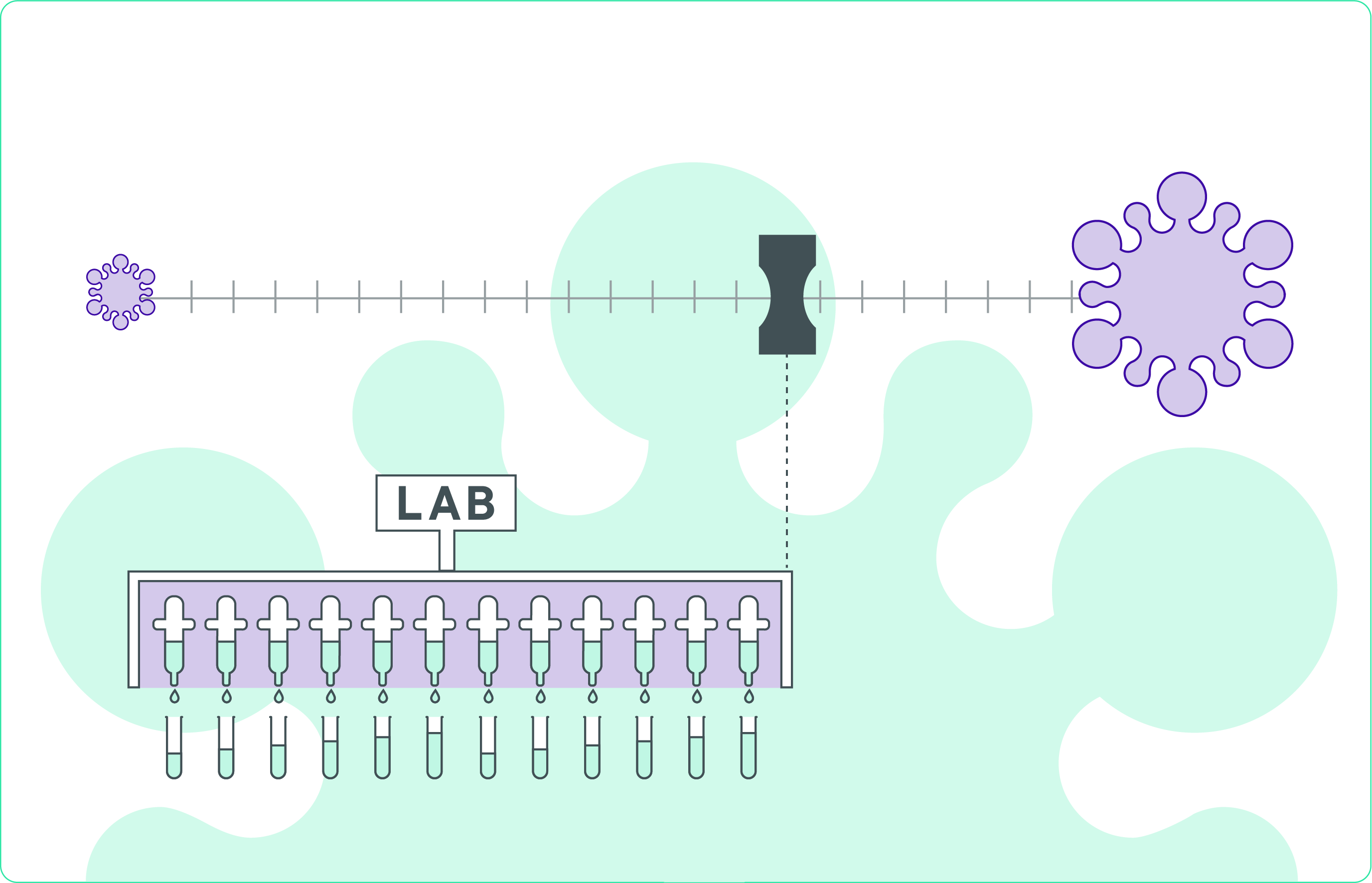
P3Dx is developing the infrastructure and protocols for a high-throughput pandemic test laboratory. The aim is to make additional test capacity rapidly available when a pandemic threat emerges, without disrupting routine medical diagnostics and screening. The target is a fully automated workflow capable of processing 10,000 to 100,000 samples per day.
The focus is on population-wide testing across society. The starting point is existing, generic laboratory facilities that can be expanded modularly: the workflow as a whole can be transferred efficiently to another facility or location.
P3Dx focuses on the development of isothermal molecular detection methods such as CRISPR-based assays or Loop-Mediated Isothermal Amplification (LAMP). The work builds on protocols and experience developed during the COVID-19 crisis. This approach helps to avoid shortages and any competition with routine PCR-based testing methods, while delivering optimal flexibility.
In addition to the development and validation of test protocols, the programme also addresses logistics, quality assurance, staff and training, documentation, traceability, and data reporting. The test protocols developed and the underlying IT routines will be made publicly available as much as possible. In the scale-up laboratory, there is an explicit focus on sustainability: workflows will be adapted to minimise the use of single-use plastics and to promote the re-use of consumables.
To enable low-threshold forms of testing, the programme will investigate options for self-collection of biological samples by individuals. The high-throughput pandemic test laboratory will allow routine analysis of viral variants. A non-pandemic use case will be selected to evaluate the workflow in practice — for example a veterinary application such as avian influenza, or an application within horticulture.
 E-mail P3DX
 P3Dx on LinkedIn